 |
Alicia Harvie
Gumbo. Po’ boys. Andouille. Jambalaya. Beignets. Fried chicken.
Although these dishes traditionally characterized the cooking culture of the American South, we’re not talking about Louisiana, Mississippi or the Carolinas. In fact, this roster of addictive fare represents one of the most popular cuisine trends to emerge in California over the past few years. Thanks to a class of chefs exploring this deep-rooted American cuisine, diners along the Pacific Coast are enjoying Southern comfort food as it has never appeared before. Move over potatoes, polenta and chickpeas, Southern flavors have pushed West, filling kitchen pantries throughout the states with yams, grits and black-eyed peas. Welcome to the frontier of the new fusion.
All in the family
“Southern cooking is influenced by many different cultures,” explains Diego Velasco, Founding Owner and Executive Chef at Memphis at the Santora in Santa Ana. “You can see clear evidence of Spanish, African and French cooking all coming together. That’s what I love about it, and what I use for inspiration to move outside the genre. You can pull off a French dish or Mediterranean dish because it will resonate with what you’re doing.”
Mixing established flavors from the South with contemporary American fare, Chef Velasco developed sophisticated Southern dishes, such as seared sea scallops with green chili grits, Cajun cream corn and fried okra, that appeal to adventurous and conventional diners alike. “It draws from traditional Southern staples, yet we’re doing it our way,” he explains. “You can’t get more southern than grits. These grits are bright green from the fresh roasted chili we use. It’s fun to eat, fun to look at, and delicious.”
Similarly, Executive Chef Josh Woodall of Oakland’s SR24, took a refined, yet expansive, approach to comfort cuisine. “If you went into a town hall and asked 100 people what they thought American food was, and elevated those dishes, that’s what we’re doing.” It is a pan-American genre that allows Southern influences to dominate SR24’s menu. “A lot of typical American dishes are Southern,” Woodall explains. “Mac ’n cheese. Mashed potatoes and gravy. Peach cobbler. Braised pork with grits and greens. Fried chicken. The list goes on.”
Also displaying the wide range of Southern cuisine, is the front porch, a Southern-inspired establishment in San Francisco’s Mission neighborhood. “We really do pan-Southern fare,” says owner Kevin Cline. “Our cuisine ranges from the Carolinas, to Texas to New Orleans.”
The hook, says Cline, is offering what he calls “Southern Mission Hospitality” and affordability. “This is a tiny restaurant, seating fifty people,” he explains, adding, “not many people are doing this cuisine at our price. We do a happy hour called the Blues Hour for snacks and drinks. We serve mini po’ boy sliders, a jar of pickled veggies, hushpuppies, fried okra and jalapeno lime aioli. It’s a great way of being fed after work, on the cheap.”
O, Pioneers!
Although Southern establishments typically fall under the reasonably priced, more casual, dining category, this does not mean that the dishes served lack sophistication or originality. In California and Nevada, chefs foraying into the flavors of the South agree that they’re on the forefront of a trend, seeking to elevate a long-neglected cuisine.
Chef Tanya Holland of Food Network fame, runs Oakland’s Brown Sugar Kitchen, whipping up irresistible chow that draws from her African American heritage and formal training at La Varenne Ecole de Cuisine in France, breathing new life into traditional Southern dishes.
“I grew up eating soul food,” she offers. “There aren’t many restaurants that elevate our cuisine into a modern environment. I wanted to do what Bobby Flay did for Southwestern food at Mesa or what Mario Batali did for Italian. It’s this cuisine’s turn.”
How does a chef elevate fried chicken, you might ask? “The ingredients add up,” Holland answers. “Our most popular dish is chicken and waffles, which of course sounds crazy decadent. But we make it with organic flour, cornmeal, milk and butter. We use Fulton Valley’s free-range chicken. We make our own apple cider syrup and compound butter. All that care really adds up. Our waffles are light and airy. The chicken is delicious.”
Also spearheading the movement is Executive Chef David Lawrence, who opened 1300 on Fillmore with his wife, taking inspiration from the history of San Francisco’s Fillmore neighborhood. “It’s really the Harlem of the West, with a strong African American culture” says Lawrence. “This is an area of food that’s been neglected, and I think it needs pioneers like myself and other chefs to elevate it.”
In that spirit, Lawrence crafts dishes like his Warm Poached Egg Salad. “We take bacon, render it down and add a garlic vinaigrette. Then we add savoy cabbage and wilt it with the heat of the pan. We top it with a bit of Point Reyes blue cheese, croutons, the poached egg and a slice of bacon on top.”
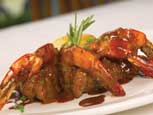
A more familiar Southern staple is his barbeque shrimp and grits, a take on the classic Carolina Lowcountry dish. “We use Anson Mills’s stone ground organic white and yellow grits to make the creamiest grits this side of the Mississippi. Our barbeque sauce uses Worcestershire sauce for tang, a touch of cream, cayenne pepper, salt, diced tomato, garlic chips, all put over the shrimp.”
Chef Jay Foster, who heads farmerbrown in San Francisco, had a different vision for his restaurant. “Being from North Carolina, I had to learn how to eat all over again in Northern California. I was craving the food I grew up with.”
In describing the vision behind farmerbrown, he explains, “I wanted to get at the roots of what soul food is. All the food originated from the farms, from the slaves. So that’s why I called it farmerbrown, to pay homage to the roots. And we’re doing well. We sell a ton of catfish and ribs. And our grits are amazing.”
Creative Creole
Native to New Orleans and Louisiana, Creole cuisine blends French and African American influences and features prominently on Southern-inspired menus popping up in the West.
“I’m of Filipina and Creole descent. Born and raised in New Orleans,” Executive Chef Brenda Buenviaje of San Francisco’s Brenda’s French Soul Food explains. “Creole cuisine, which is more sophisticated, has French and Italian, as well as African American influences. Po’ boys. Gumbo. Jambalaya. That’s what I grew up watching my mother and grandmother cook.”
Brenda’s has been a huge hit in the city’s Civic Center, where customers come for richly flavored breakfast and lunch items. “Customers are so loyal to the dishes I have, that I pretty much can’t touch the menu,” she adds. What makes diners so loyal? “If anything, people are excited about the big flavors I’m serving. Our beignets are a signature item. The beignets that originated in New Orleans are fried dough that puffs up. I stuff mine with Ghirardelli chocolate, apple cinnamon, or our most popular version – crawfish.”
Beignets are also a hit on 1300 on Fillmore’s menu. “I always tell our customers to save room for them. We make them with brioche and sticks of chocolate. They’re served with a creamy coffee spritzer – coffee and syrup put into a spritzer bottle to foam it up. We serve it on the side so people can dip the beignets in it. It’s to die for.”
Executive Chef Diana Davey boasts a long career working with Chef Emeril Lagasse in his Las Vegas establishments. Today she leads his Table 10 in the Palazzo.
“When I was given the restaurant, he told me he wanted it to be an American restaurant. So there was room for Southern cuisine on our menu. A big star is our Creole Crawfish ‘Boil’ Pasta, which plays on a traditional Creole boil. We put a whole crawfish and shrimp in a big pot, with corn, sausage and pasta, instead of traditional potatoes. Then we add a crystal cream sauce for more dimension.”
Figuring out the fundamentals
Importantly, those looking to capitalize on this trend will need to master the basics of Southern fare.
“If you’re going to make a gumbo of any kind,” advises Chef Buenviaje, “know how to make a roux. All roux is half flour, half fat, but our roux is really decadent. We use lard because it tastes really good and cook it nice and dark, without burning it. That takes patience, as do all the slow-cooked meals of Southern cuisine.”
Chef Velasco emphasizes another staple at the foundation of most Southern dishes, “The holy trinity is a fundamental: onions, pepper and celery. We do a Cajun dish called Maque Choux. It’s basically a cream corn with the trinity and smoked ham.”
“Another signature of Southern cuisine,” he continues, “is classically paired items like seafood and pork products and knowing which combinations work. Bacon and oysters. Or our smoked ham on the cream corn paired with beautiful seared sea scallops.”
The West is best
Of course, the big bright side to doing Southern fare in the West is the opportunity to marry the bounty of California ingredients with Southern recipes.
“The produce here is just so awesome, and it allows us to think outside the box,” Chef Lawrence states. “We had a chilled watermelon soup a bit ago. It was pureed watermelon with Meyer lemon crab crunch on top and a little olive oil. California is one of the best places to do something like that.”
Chef Buenviaje also appreciates the locale. “Being in the Bay Area, I couldn’t ask for any better, in terms of produce. Strawberries are gorgeous right now and are dirt-cheap, which is perfect for my strawberry cobbler pancakes.”
The front porch offers a seared sustainable fish Pontchartrain, pairing the best of local fisheries with a Pontchartrain sauce of wild mushrooms, blue crab and hollandaise. “You get that New Orleans flair, but with local fresh ingredients,” says Cline.
Still on the horizon
On the heels of his third year of success at 1300 on Fillmore, Lawrence sees a strong future for this trend. “This will become popular and stronger around the country. More and more, you will see restaurants like this in Chicago, New York, Washington. I’m sure of it, because I’ll open them if no one else does.” Southern cuisine’s rich role in America’s cooking culture, in addition to its deeply satisfying and diverse fare, makes it hard to go wrong with flavors and dishes, rooted in the American South. It is undeniable that this region’s comforting cuisine is winning over diners in the West, and chefs are taking note. Will fried chicken and grits be your next menu hit?
Alicia Harvie has been actively involved in food and farm issues for years now and has a strong interest in creative “farm to table” linkages in culinary culture. She also loves any and all things chocolate. When not writing, Alicia works as the Program Manager for Farm Aid (www.farmaid.org), where she pens its “Ask Farm Aid” column each month. Farm Aid's mission is to build a vibrant family-farm centered system of agriculture in America. Alicia can be reached at alicia.harvie@gmail.com.