 |
Caitlin M. O'Shaughnessy
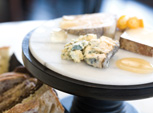
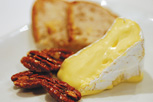
With more than 50 cheese makers producing over 130 types of cheese, California produces more cheese than any state but Wisconsin. It makes sense in a region of the country known for its lush vineyards and fertile soil, that cheese, a natural companion to wine, has become a primetime player. Chefs across the West Coast are featuring the myriad artisan and specialty cheeses imported from Europe and crafted in America, not only as an accompaniment but as a focus of the meal and enjoyed as a separate course during the dining experience.
David Barriball, the Cheese Buyer & Director for Restaurant Gary Danko in San Francisco, comments on the rising trend of cheese plates, saying, “I prefer the cheese course after the main course, before or as dessert. There are two schools of thought on this: the first is that the bacteria of cheese helps the digestive process and the second is that the intense flavor of cheese is best enjoyed after dinner to prevent one’s palate from being overwhelmed and overpowering the flavors of the rest of the meal.” Whether you choose to enjoy your cheese plate before dinner or after, the addition of a fabulous fromage during your dining experience is never a mistake.
At San Francisco’s Jardinière, Chef and Co-Owner Traci Des Jardins makes it clear that the cheese takes center stage, with an entire room of the restaurant solely devoted to its proper storage. Having worked at several high-profile restaurants including Montrachet in Manhattan along with being named a James Beard Foundation “Rising Star Chef of the Year,” Des Jardins takes cheese seriously. Jardinière features a separate cheese menu that includes mostly European cheeses (two hail from France, one from Spain, another from Belgium and finally a goat’s and cow’s milk crème fraîche from Santa Rosa, CA) changing almost weekly.
Executive Chef Morgan Mueller features a French-California cuisine and notes that while “diners are open to all the cheese on the menu (raw, aged, blue, washed rind), people really seem to love the creamier cheeses.” Mueller recommends the cheese plate as a snack at the bar or for dessert, and says that Jardinière “features some of the best aged cheese in the city” because of their ability to control the conditions of the aging in their very own cave.
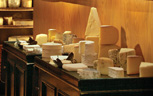
The cheese cart at Gary Danko
Restaurant Gary Danko opened with a single cheese cart in August 1999, and now offers a globally inspired selection of artisan cheeses that change each evening “based on seasonal availability, variety and popularity while maintaining a balanced mix of local, domestic and international varieties,” according to David Barriball, the Cheese Buyer & Director for the restaurant. Arguably one of the most impressive cheese programs in the country, Restaurant Gary Danko now has two cheese carts that each feature 16 to 20 cheeses.
“People are becoming more adventurous with their cheese selections,” says Barriball. “They will always love the creamier bries and sharp cheddars, but I see more people trying goat’s milk, sheep’s milk and washed rind these days. Only two cheeses have ‘regular’ status on our cheese cart and prove to be both guest and staff favorites: Roaring Forties Blue – a buttery, sweet, complex blue cheese from Tasmania – and Midnight Moon – a nutty sharp goat’s milk Gouda aged in Holland for California’s own Cypress Grove Creamery.” Current winter selections at Restaurant Gary Danko include cheeses like Vacherin, Taleggio, Cowgirl Creamery’s Red Hawk, and the French cheese Brillat Savaran, which is made by adding hot cream straight into the curd in order to raise the fat content to a whopping 78 percent.
Even with cheese, knowledge is power
A successful cheese program involves much more than just choosing a few cheeses to serve on a particular night. Barriball describes what goes into a well-rounded cheese service explaining, “If you are going to start a cart-served cheese course in your restaurant, knowledge is key. Cheese is a course but also a service. Staff needs to be trained and updated. At Restaurant Gary Danko, we update all staff members on new cheese (flavors, origin and history) before each night’s service. Guests tell me that they love hearing about different cheese almost as much as eating their selections. From a perspective of running a cheese program, you need to be researching and tasting new cheeses constantly. Keep in mind that cheese is perishable; only buy what you can sell.” Chef Zach Allen, of Mario Batali’s Enoteca San Marco in Las Vegas, further elaborates on the difficulties of creating an outstanding cheese course: “You have to carry a large overhead in inventory, and there are often under- or over-ripened cheeses. Serving the cheese at the correct temperature can be difficult as well.”
American artisans are on the rise
Although European cheeses have dominated the cheese course scene in the United States, more recently diners have begun to gravitate towards high-quality artisan cheeses made in America instead of sticking with the classic and more well-known cheeses from France, Spain and Italy. For instance, California’s own Fiscalini Cheese Co. has not only received national recognition for its environmental and animal welfare concerns, but also for the company’s extraordinary milk quality and the talents and expertise of their Master Cheesemaker, Mariano Gonzalez. Gonzalez developed the Extra Mature Bandage Wrapped Cheddar, winning the American Cheese Society’s “Best Farmhouse Cheese in North America” award five times, in addition to the restaurant hit, San Joaquin Gold, gold medal winner at the World Cheese Awards in London in both 2004 and 2005.
Along with the wealth of California cheese makers, the trend towards outstanding and small-batch cheese made with high quality and local ingredients has spread throughout the US. Founded by Errico Auricchio in 1979, BelGioioso Cheese in Denmark, Wisconsin, specializes in all-natural, award-winning Italian cheeses. Aged 18 months, their American Grana special reserve parmesan recently took third place in the 2009 World Cheese Awards, further emphasizing that American cheese makers are establishing a presence in the artisanal cheese making world. Barriball describes the trend, writing, “Here in the US, cheese is moving away from the large factory production towards more artisanal production with new makers starting all the time. So it’s important to keep an eye out for new creameries.”
Formaggi flourishes in Las Vegas
At Mario Batali and Joe Bastianich’s Enoteca San Marco at the Venetian in Las Vegas, the formaggi menu “is a no-brainer. It’s an integral part of the Italian table, as well as with our heavy focus on house cured meats and wines by the bottle, cheese just makes a great match,” says Zach Allen, the Executive Chef and Mario’s protégé since 2000, not to mention the consulting salumist to all of Batali and Bastianich’s restaurants.
Cheese courses have become an undeniable trend at Enoteca San Marco, with almost 12 percent of the diners in the last month ordering a cheese plate with their meal and over 1000 boards (consisting of three, five or seven cheeses) sold in the last month alone. Chef Allen recommends pairing the cheeses with wine or salami, and all cheese boards come with brandied Amarene cherries, house-made black truffle honey and a house-made apricot mostarda.
While wine and cheese remains the most popular pairing, house-made charcuterie programs are also on the rise throughout top-notch restaurants on the West Coast. At The Village Pub in Woodside, California, Chef Dmitry Elperin, a graduate of the CIA in Hyde Park who has worked with Daniel Boulud, offers a cheese program that introduces raw cow’s milk cheese from Vermont, a semi-firm cow’s milk cheese with a muscato and herb rind from California as well as several European favorites.
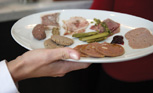
While discussing the selection at The Village Pub, Elperin notes that he makes his choices “based upon the season. During spring, goat cheese is a wonderful selection due to the quality of the milk… I often visit the Ferry Plaza where Cowgirl Creamery is located. I make my decisions based upon flavor, texture and the purveyor’s recommendations – one of my favorites is Cow- girl’s Red Hawk, a triple-cream washed-rind cheese.” Along with the cheese, the charcuterie selection includes duck liver mousse, Moroccan spiced lamb pâté, mortadella, and rabbit pâté with black truffles, among other meats.
A similarly impressive charcuterie and cheese pairing is showcased at Tami Ratliffe’s Café Chloe, which has a fromage plate with three selections (Humboldt Fog, a semi-soft cheese with a ribbon of edible vegetable ash running throughout; Testun al Barolo, a mixed milk cheese from the Piedmont region of Italy; and Cantalet, a hard cheese from Auvergne, France) as well as charcuterie du jour.
With so many restaurants now featuring the best of seasonal, local, imported and artisanal cheeses, the choice to offer a carefully chosen cheese plate to your diners isn’t a question, but rather an opportunity that can’t be missed.
Caitlin M. O’Shaughnessy lives in New York City, working for Penguin Publishing and previously part of the team at InStyle magazine. She writes for The Paris Voice and fell in love with fromage when living in Bordeaux and Paris. She enjoys trying new recipes, reading and writing about food – especially Mont d’Or, her favorite cheese of the moment.
A Life on the Wedge
Gordon Edgar
Chelsea Green Publishing
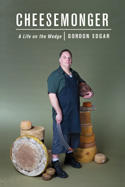
Cheesemonger: A Life on the Wedge is the engaging story of Gordon Edgar’s unlikely move from punk-rock political activist to a serious career as a cheesemonger at Rainbow Grocer Cooperative, San Francisco’s biggest independent grocery store and the country’s largest retail worker co-op. With a refreshingly unpretentious sensibility, Edgar intertwines his own life story with his ongoing love affair with cheese, offering a firsthand perspective on America’s growing cheese movement. Renowned Chef Charlie Trotter proclaims that Edgar’s memoir “is witty, insightful, and utterly packed with passion and fine humor. This book now goes on the ‘required reading’ list for my entire staff!” The book covers topics from problem customers to animal rights, business ethics to taste epiphanies, making it a fabulous read for fromage fanatics to urban food activists alike.
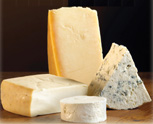
This concise, yet in depth cheese plate guide provides useful tips on how to compose the perfect cheese plate by making your cheese purchases work for your business. The manual emphasizes the importance of quality and consistency in the cheeses that you choose to share with your diners, since these decisions can inevitably affect customer satisfaction, leading to an increase in patron visits and ultimately growing your restaurant’s profits. Not only does the manual offer chefs and restaurateurs suggestions on what wine and accompaniments best match particular cheeses, but it also gives tips on how to compose and describe your cheese to guests. For instance, BelGioioso’s Auribella should ideally be paired with sherry, port or a full-bodied Zinfandel, enhanced by the addition of pears, fig jam and water crackers in order to create a well-balanced cheese plate.
If you would like a copy of the manual, or for additional information and pairing guide please contact cheeseplate@BelGioioso.com.