 |
Fizz, flavors and no alcohol?
Caitlin M. O’Shaughnessy
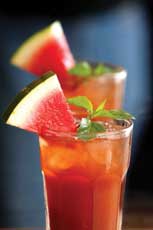
Creative mocktails, specialty sodas and alcohol-free drinks are not only an affordable alternative to revamping stale beverage menus, but these gourmet options allow diners of all ages and beliefs to enjoy drinks as creative as their food. Smoothies and fruit juice are just the tip of the iceberg; these seasonally-inspired, and often locally-sourced, options are beginning to explore increasingly sophisticated flavor profiles that are free from the confines of the traditional pairings that are mixed with spirits and liqueurs.
“It’s a much bigger group than you think,” says Clark Wolf, a restaurant consultant in New York and California. “There are more people who absolutely will not drink at all, and people who will not drink during the daytime or, as we say, on a school night.”
The trend is beginning to spread across the country. For example, in Houston, Texas, Phillip Mitchell, the chef/owner of Bistro Calais, offers a four-course meal paired with non-alcoholic drinks, popular at lunch and weekday evenings. “I guarantee you that in a couple of years this will be a common thing in restaurants nationwide, like vegetarian tasting menus are,” Mitchell said.
Old standbys updated with new flavors
San Francisco’s Starbelly is a “casual Castro neighborhood café serving California comfort food” that has been quick to embrace the trend of non-alcoholic beverages. Their “All Ages” drink menu includes a ginger-lime rickey, freshly squeezed juices, kombucha on tap and a Darjeeling tea, made with lime, basil and egg white. Deborah Blum of Starbelly says, “I always thought it was odd that you can go into a grocery store and buy all kinds of flavored waters, juice and tea blends, yet most restaurants only offer a few things that are non-alcoholic to drink, such as iced tea or lemonade. We thought it would be great to offer some interesting, seasonal, lighter bodied non-alcoholic beverages that could be enjoyed with food. As far as creativity, I think initially it’s more challenging to create interesting drinks without alcohol, but once you start experimenting, it’s incredible how wonderful herbs, fruit and vegetables can be, when combined in the right proportions. Since the spirit is not there, you need a slightly more delicate touch with the flavors. When done right, it’s a whole different beverage group that can be both healthy and delicious.”
Aside from offering more exciting options for those who don’t drink, mocktails offer bartenders the ability to create new drinks that aren’t inhibited by the strong flavors of the spirits found in typical cocktails.
Allyson Jossel, of Nopalito, a sustainable organic Mexican kitchen in San Francisco, talks about the freedom of creating beverages not based on alcohol. “I think any time you can create a beverage that has a wide market range you have more freedom to try a variety of different ingredients that can be paired out of the normal settings; like adding an herb to lemonade or infusing spices into fresh squeezed juices without the stifling effects of alcohol,” she explains. “You’re not disguising the actual freshness and flavor, but enhancing it so it pops in a way that reminds you of something familiar. In Mexico, fresh juice is really popular, the whole idea of agua fresca, but we took a spin on that and made sodas with juice and sparkling water. The most popular, and a Nopalito staple, has been the horchata. Next in line would be the bergamot mint lemonade.”
Similarly, Chef Mohan Ismail at RockSugar Pan Asian Kitchen in Los Angeles has found that alcohol-free options can pair better with a variety of tastes than traditional cocktail choices. “When developing our beverage menu, we felt that it was important to offer selections that were as creative and varied as our food menu, which features cuisine from six different Southeast Asian countries.” He continues, “Our most popular non-alcoholic beverage is our lime mint squash, which contains fresh lime, mint, calamansi and soda. RockSugar also features passion fruit and salty coco-pineapple lassis (a traditional Indian yogurt-based drink) and a yuzu lemon crush, which is made up of lemongrass, yuzu, lemon and soda, poured over ice.”
The freedom that comes with creating beverages without any restrictions on ingredients is both exciting and a tough task to tackle. Allyson Jossel discusses the challenges of working with alcohol-free beverages explaining, “I think some of the obstacles are keeping the integrity of the beverage. The longer citrus sits, the less zing it has.” She notes that making sure all employees know the measurements and how to properly mix the drink is crucial. Additionally, an increase in labor to make the syrups, juice and create new beverages, is also a crucial component to keep in mind. Furthermore, restaurants serving house-made alcohol-free beverages, need to establish a set of standards that is normally not necessary when serving sodas and other packaged beverages.
If a diner orders a diet soda before the meal, that pre-made beverage does not give the guest a clue as to the talent that may or may not come from the kitchen in subsequent courses; consequently, it is less likely that guests’ curiosity will be stimulated. On the other hand, if that same customer starts his or her dining experience with local organic house-made lemonade, twisted up with bergamot mint from Marin Roots Farm, topped with filtered soda water; patrons will certainly take note, asking if this restaurant takes such time, care and pride in a simple beverage, then what could be next? By piquing one’s interest early on with unique beverage offerings, the inquisitive diner will be more inclined to order the empanada that they were curious about from the beginning.
Mocktails: a lucrative and inclusive option?
Financially speaking, mocktails are a great way for restaurants to “embrace all our guests and provide unique libations that satisfy the eye and the palate. On a cost level, it is more lucrative to sell mocktails than iced tea,” says Elaine Danoff, the bar manager at COCO500 in San Francisco. COCO500’s “sober beverage selection” includes a popular virgin “nojito” with fresh mint, lime juice, organic cane sugar and a local seltzer made by Seltzer Sisters in San Francisco; a daily fresh made agua fresca featuring seasonal fruit; and Danoff’s favorite, the cranberry mule, which combines “Maine Root fair trade ginger brew, with organic cranberry juice, lime juice, and a touch of organic cane sugar.” Danoff also notes that “pregnant ladies drink for free when I’m at the bar…sober libations only of course. A girl can still go out with her friends!”
Ian Ward, the mixologist at La Jolla’s Whisknladle, supports Elaine’s assertion that non-alcoholic beverages do not hurt a restaurant’s overall revenue. He discusses the financial implications of promoting alcohol-free options saying, “It does not hurt our bottom line at all. Our mocktails are comprised of ingredients that have multiple uses…for example the house-made strawberry jam (created to increase the shelf life of strawberries on hand, reducing spoilage) is also in our strawberry daiquiri. We are essentially ordering the same amount of ingredients and are able to offer alternatives to guests who are looking for an alcohol-free meal. Most of our guests who order non-alcoholic drinks would just be ordering regular soda or water if we didn’t offer these innovative alternatives.”
David Johnson of Bay Wolf, an Oakland restaurant that serves seasonally inspired Californian-Mediterranean fare, notes the importance of having options on his menu that all of his guests can enjoy. “From the micro-economic aspect of non-alcoholic beverages, it does not behoove us to promote these offerings heavily, however on the whole, it is crucial to have these options for our guests so that their experience is enhanced, they feel taken care of, and more importantly, not ostracized because they are choosing not to drink alcohol on that visit,” he explains. “For example our Navarro Gewurztraminer grape juice is a wonderful way to offer an option to guests that want to be discreet during celebrations and such.”
In a similar vein, San Francisco’s Tacolicious features a “Drivers, Kids and Recovering Bartenders” menu which includes agua frescas, house-made lemonades and mocktails like the Mia (cranberry, orange juice, and fruit salsa); the Silas (lemon, lime, and mint); as well as the Moss (passion fruit, pineapple and sparkling lemonade), named after owner Joe Hargrave’s three children. The thought and care that goes into creating these drinks is evident, as Hargrave explains that a lack of alcohol doesn’t mean a lack of imagination, “They’re kid-friendly of course, but also made with grown-up ingredients, such as cranberry juice with a beautiful little fresh fruit salsa on top. And there’s nothing like fresh-ginger simple syrup to give a non-alcoholic drink a kick.”
Shaking up fresh ideas for unusual combinations
One of the most interesting opportunities that the influx of new non-alcoholic beverage menus presents is the potential for new and unique food and drink couplings. During a recent pairing dinner at French Laundry, Chef Thomas Keller and Wine and Beverage Director Paul Roberts selected whole milk to accompany a dish of tagliatelle with black truffles and butter. For lobster fricassee, Roberts poured a dry Meyer lemon GuS soda, and he paired a chilled chamomile tea with coho salmon roe served over a buttery porridge. For foie gras, the beverage of choice was a Boylan Bottling Company root beer from their vintage soda pop line.
Taking the food and beverage pairing one step further than the status quo is Lamill’s coffee boutique in the Silverlake neighborhood of Los Angeles. Not only do they serve top-notch coffee, tea and alcoholic beverages, but Lamill’s signature beverage menu is at the forefront of original and inspired non-alcoholic options. Their “coffee and a jelly donut” is composed of strawberry essence layered with donut-infused milk and topped with espresso; an innovative pairing that creates an entirely new drink made up of two old favorites. The “Caramel Corn” is even more creative, combining unusual ingredients of fresh peanut milk and espresso, topped with popcorn infused cream and house-made caramel. Not surprisingly, the sweet and savory combination has become one of Lamill’s most popular drinks.
With so many well-conceived and expertly crafted alcohol-free beverages being offered on the West Coast, it is hard to imagine a better time for diners to take a second look at what’s new behind the bar.
Caitlin M. O’Shaughnessy lives in Brooklyn and works at Penguin Books, where she enjoys reading the many cookbooks and food memoirs that cross her desk. She was previously a part of the team at InStyle magazine and writes for The Paris Voice. Her favorite non-alcoholic beverage is still the Shirley Temple, truly enjoying this old-school staple.