 |
Christina Mueller Welter
As the “aught” decade winds down and “tens” decade dawns, brides, wedding organizers and those in long-term committed relationships are still knocking down the doors of venerable culinary establishments to find the au courant locale and food for the Big Day. If the old logic still applies that a bride only gets married once in a lifetime, she wants to make an impression on her wedding day. In contrast to former years when the economy was stronger, today’s wedding may be smaller in size, but the bride still wishes to dazzle her guests with a custom menu, unique protein choices, and a focus on quality ingredients.
Custom menu for the sophisticated customer
Wedding customers are more sophisticated and more interested in the quality of the food than in previous years. The profusion of tasting menus at upscale restaurants, TV programs like Top Chef and increased media coverage of issues like factory farming and over-fishing contribute to the customers’ heightened food awareness. “I’ve had customers walk in and say, ‘I don’t want salmon on my menu because it is over-fished,’” explains Janine Jacobson, Event Director at Foreign Cinema in San Francisco. “They want the sophisticated level of cuisine at their wedding that they receive on a regular basis at our restaurant.”
Customers are more specific now according to Amy Gibson, Director of Catering at the Portola Hotel in Monterey. “People will come in and ask to sit down with the chef to create custom menus for their wedding. They tell us their budget and ask, ‘What’s fresh? What can I get at this price?’”
The Spanish tapas or small plates trend earlier this decade remains an on-going force in wedding food and can impact the style of a wedding. Hotels and restaurants around the state continue to receive requests for the traditional three course wedding format of passed hors d'oeuvres followed by a sit-down dinner and dessert; but, as tasting menus receive more attention, the interest in small plate menus – entrée equivalents in a smaller portion, served with a fork – can seamlessly blend a customer’s desire to have a more casual format with a beautifully presented plate.
“We’re still seeing sit-down dinners rather than buffets,” says Executive Chef and Food and Beverage Director, Hermann Schaefer, of the Hilton San Diego Resort & Spa on Mission Bay, “but we’re getting asked for more five-course tasting menus rather than the traditional three courses.”
Focus on quality ingredients & sustainability
On the rise this year is an increased importance of product freshness and source. Particularly in Northern California, the local or locavore movement has gained momentum and is at full speed, becoming an undeniable factor in many customers’ menu selection.
“We’re seeing a bride ask for 100 percent organic or green weddings,” says Diana Wittenbrock, Director of Banquets at the Hotel Shattuck Plaza in Berkeley. A bride no longer wants sustainability only for her place cards and invitations. “We are asked to make the entire menu sustainable and local, including the cake,” she says.
A familiarity with a wedding locale brings high expectations of the food. California-sourced ingredients, from the seafood to the wine, are more important.
“We’re picking up more wedding business,” says Jacobson, “and it is mostly guests who have dined with us before and are familiar with our focus on sustainable food.”
Unique protein choices
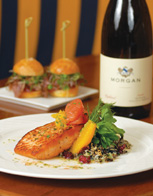
A sophisticated palate may not be happy with the old-fashioned wedding menu mantra of meat, fish and vegetarian option. “We’re seeing an increase in requests for unique meats like duck and squab,” says Schaefer. “A bride will ask for black cod for one course because it is a more sustainable seafood choice and ask for venison for another course because it is a lean meat and different meat” than is usually seen at weddings, he says.
Oyster platters and seafood stations are more important this year at Foreign Cinema. Jacobson mentioned the increase in flexibility for both the customer and the restaurant when choosing a menu. “Our customer is more open-minded and may ask for trout because it is more sustainable.” Across the Bay in Berkeley, Wittenbrock echoed this sentiment, “If a bride asks for salmon, but we are not comfortable serving a farmed salmon, we may offer halibut as an alternative.”
Presentation remains important
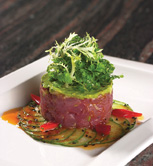
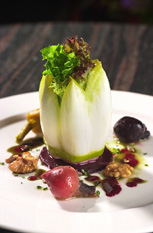
While the focus may have shifted from the uniqueness of the presentation to the ingredient on the plate, presentation should not be forgotten. Jacobson explains, “We don’t offer a buffet because we cannot maintain the integrity of the food but it still has to look great on the plate.” Schaefer confirmed that “buffets lose their presentation aspect after three customers. Customers still want to see contemporary cuisine with a twist,” he says.
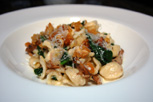
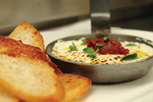
Wittenbrock offered a slightly different take. “Our customer is more interested in the food and there is a focus on ingredients,” she says, “but it still has to look good. The days of ‘stacks and dots’ are gone. We are seeing twists on comfort food.” One such dish is Executive Chef Scott Howard’s, of FIVE at Hotel Shattuck Plaza, sophisticated spin on everyday macaroni and cheese, taking the familiar fare up a notch with unexpected ingredients such as orzo, goat cheese, tomato jam and chanterelles.
Wine and drinks
Are brides moving away from ‘signature drinks’ and towards a cash bar? There is no consensus here. There is, however, a movement towards California bottles as well as organic wines. The Hotel Shattuck Plaza recently added organic wines to its menu in response to diners’ requests.
Price is more important this year with customers holding to a price point around $30 to $50/bottle and not upgrading. Customers know more about wine varietals and request to purchase their own wine. Some customers now request wine pairings with each course.
Marketing to diversity
Although the popularity of weddings may not have changed drastically in the past decade, now the wedding clientele walking through the front door of your establishment has evolved from traditional and predictable to pioneering and unique. This diversity in weddings and other commitment ceremonies presents an opportunity for hotels and restaurants to locate new customers from a larger audience. For instance, the Portola Hotel is re-positioning itself to be more fun and approachable, using social media to reach potential new clients. “We are seeing a lot more couples from diverse backgrounds, i.e. Thai and Caucasian,” says Gibson, “and we are getting more requests for gay and lesbian weddings.” The changing composition of wedding audiences is the perfect opportunity for restaurants and hotels to become creative in their event services.
Social networking sites like Yelp, Facebook and Twitter can build awareness of and momentum for your catering business, but print media and in-person meetings are still important to wedding organizers. “We have a presence on theknot.com as well as in Here Comes the Guide,” says Wittenbrock. The Hotel Shattuck Plaza is currently developing a program to launch in the second quarter of 2010 to host bridal fairs at the hotel. The Hilton on Mission Bay, San Diego, finds referral success in print media as well as at bridal shows, online and from its restaurant business.
“Always be willing to work with clients,” continues Gibson. “Rehearsal dinners are the tradition but you can use their private room for brunch the morning after the wedding, box lunches when they are leaving the next day.”
Weddings continue to be important business in 2009 and 2010. Now more than ever, a laser focus on quality and a frank discussion with the wedding organizer are keys to a successfully planned event. Brides are always on the lookout for the fresh spin and the unique angle to make their special day a remarkable one for every person present. Openness to culinary fusion and contemporary cuisine with a twist, whether it be a result of flavors or ingredients or presentation style of a dish, thinking outside of the wedding box is the difference this year.
Christina Mueller Welter is a dedicated entrepreneur who is passionate about wine, food and travel. She is a creative product development and marketing consultant for gourmet, natural and allergen-free foods, in addition to San Francisco Professional Food Society’s Membership Chair. Christina blogs about food and wine at http://thoughtfulgourmet.blogspot.com/ and Tweets at EatDrinkThink. Her favorite edible flower is basil, and her favorite wine varietal is currently gewürztraminer.